The 70th session of the Commission on the Status of Women (CSW70), convened by UN Women, is the United Nation’s global forum for advancing gender equality and the empowerment of women and girls. The active participation of civil society is a cornerstone of CSW, ensuring that global commitments are grounded in lived experience and informed by those working closest to the most affected and vulnerable communities.
CanWaCH attended CSW70 to both contribute to and learn from these global discussions. Representing a diverse network of partners across sectors, our presence was especially important in the context of shifting political and funding landscapes.
Attendance overall was lower than in previous years, due to constrained budgets, more stringent travel requirements, and heightened security considerations. This made CanWaCH’s participation even more critical in ensuring that our network, particularly those unable to attend, could benefit from timely insights, shared intelligence, and strengthened relationships with key partners and decision-makers.
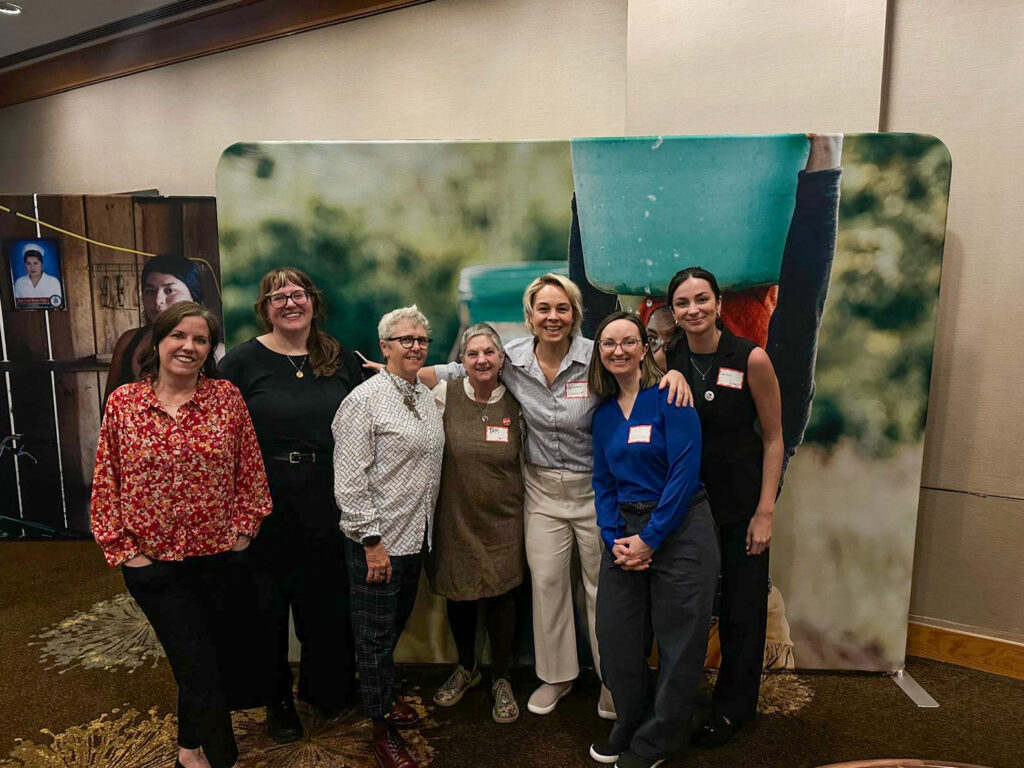
CSW70 also provided an opportunity for CanWaCH to convene members through a side event co-hosted with Ipas focused on the health and well-being of girls. Convening members and Canadians alongside international friends and partners at these international gatherings remains an integral part of our approach, creating space to connect, exchange perspectives and engage in honest, solutions-oriented dialogue. CanWaCH takes pride in fostering environments where members feel supported and welcomed, and where there is space for “real talk” on both challenges and opportunities, ultimately strengthening collaboration and collective impact across the network.
UN80 merger:
A major point of discussion at CSW was the potential merger between the United Nations Population Fund and UN Women, driven by the ongoing liquidity crisis within the UN system. The proposal generated significant concern among stakeholders. During a town hall with civil society, Secretary-General António Guterres emphasized that difficult decisions are necessary to sustain the system, noting that without adaptation, there is a risk of losing critical institutions. He also reassured participants that the core mandates of both entities would remain intact.
However, civil society actors raised concerns. Chief among them is the risk that consolidation could signal a broader deprioritization of gender equality. There are fears that merging UN Women and UNFPA could dilute distinct mandates, reduce dedicated funding and weaken their ability to serve as strong, independent global advocates for women’s rights. More broadly, stakeholders warn that hard-won gains could be eroded if specialized mandates are absorbed into broader structures.
Moving forward, UN80 will host quarterly town halls with civil society to ensure ongoing dialogue and input into the reform process. For more information, please see the UN80 FAQ.
Agreed Conclusion negotiations:
Each year, CSW member states negotiate an outcome document known as the agreed conclusions, which builds on the Beijing Declaration and sets global priorities aligned with the session’s theme. Some agreed language in the document cannot be changed. Annual negotiations focus on identifying new priorities and updating or expanding existing commitments.
In practice, the process begins well before the Commission convenes, with an initial “zero draft” prepared and circulated. Once CSW begins, member states enter formal negotiations, often working line by line through the text. These negotiations can be dynamic and, at times, contentious, as countries bring forward differing political positions and priorities. Language related to sexual and reproductive health and rights, gender identity and broader human rights protections is often heavily debated, with amendments proposed throughout.
This year’s negotiations marked a significant departure from longstanding practice, as the agreed conclusions were adopted by vote rather than consensus for the first time in the Commission’s history. This followed amendments proposed by the United States to remove references to sexual and reproductive health and rights and other established human rights language. Their rejection prompted the U.S. to request a vote.
Alongside the negotiations, there was a strong and coordinated CSO presence on the ground, highlighting the connection between global spaces and local engagement. Canadian CSOs convened daily to review real-time updates, unpack emerging dynamics and align on key messages and approaches. Members of the Canadian delegation shared insights directly from the negotiations, alongside representatives from the Beijing+30 network, helping inform Canadian civil society in real time. In particular, Vicky Smallman, National Director of Women’s and Human Rights at the Canadian Labour Congress, played a key role in sharing real-time reflections through her BlueSky account, offering an accessible and immediate window into the evolving discussions.
Responses to Anti-Feminist and Anti-Rights Backlash:
One session on combating anti-rights backlash was particularly illuminating. The panel, composed of speakers representing regional, global and LGBTQ+ perspectives, explored approaches to addressing the rise of anti-rights and right-wing narratives. A standout speaker emphasized the importance of meaningfully engaging men and boys in gender equality efforts, stressing that feminist movements must move beyond siloed approaches and position them not only as allies but as active agents of change who understand that gender equality benefits everyone.
Another key takeaway focused on funding and movement-building. Panelists highlighted how anti-rights actors are investing in long-term infrastructure to sustain and advance their agendas, while feminist movements often face challenges accessing comparable, flexible funding. This underscores the need for stronger alignment across the sector and more strategic, sustained investment to support collective action.
The Townhall with the Secretary General of the UN
A particularly impactful session was the town hall with United Nations Secretary-General António Guterres, which offered a candid reflection on the challenges facing the multilateral system. He acknowledged ongoing barriers to participation at CSW, including funding constraints, visa challenges and safety concerns, noting that despite best efforts, the space remains inaccessible to many and therefore not fully representative.
There was a strong sense of solidarity and urgency among participants. This marked the final town hall under the current Commission leadership, with a hopeful note that next year’s session may welcome a “Madame Secretary,” signaling continued progress in women’s leadership at the highest levels.
In response to questions about how the UN can preserve its legitimacy in an increasingly authoritarian global context, the Secretary-General pointed to the people in the room. He acknowledged that many may feel constrained or stripped of formal power but emphasized that real influence lies in collective action. The more than 3,000 CSW participants represent a powerful force for change, and grassroots mobilization will be more important than ever in advancing gender equality globally.
The road to Madrid: Powering Momentum of Feminist Foreign Policy
A session titled “Road to Madrid” highlighted growing global momentum around feminist foreign policy (FFP) ahead of the 5th Ministerial Conference on Feminist Foreign Policy and Gender Equality, to be hosted by Spain in Madrid on June 2–3, 2026. Discussions pointed to a shift toward more inclusive, cross-sectoral approaches, with an emphasis on the role of civil society in shaping policy agendas. France, which hosted the previous conference, was cited as a leading example, having grounded its approach in broad civil society consultation and opened its political declaration for input. While this carried political risk, it secured endorsement from 31 countries and was highlighted as a model of transparency and ambition.
Looking ahead, planning remains underway, with a strong focus on meaningful civil society engagement. Participants emphasized the need to move beyond symbolic inclusion toward genuine participation, particularly for grassroots and frontline actors often excluded despite being critical to policy and implementation. For government relations and policy actors, this signals an important window to engage early, shape priorities and advocate for inclusive processes that reflect both global and community realities.
Across the session, a clear shift emerged from traditional multilateralism toward more inclusive, multi-stakeholder models, with civil society playing a more active role in agenda-setting and accountability. Mexico was highlighted as a key example, as the first Global South country to adopt an FFP, demonstrating the importance of cross-sector integration and shared leadership. Overall, the session reinforced that advancing FFP will require broader partnerships, stronger accountability mechanisms and a willingness to rethink how policy is shaped, particularly in a context of increasing political uncertainty and backlash.
Our time in New York City at CSW offered an up-close look and, at moments, a sobering reflection on the state of global gender equality efforts. Across formal negotiations, side events and informal conversations, a clear picture emerged of a movement shaped by shifting power dynamics, evolving funding realities and increasing ideological polarization. At the same time, there was a strong undercurrent of resilience and resolve, with civil society and grassroots actors continuing to lead, adapt and mobilize in the face of mounting challenges. The reflections that follow highlight both the constraints we must navigate and the opportunities we can build on.
We now have a real-world example of what happens when long-term funding models are applied to grassroots organizing — and in this case, it is being set by anti-rights movements. While the right has mobilized in both numbers and funding, a recurring theme across sessions was the current funding architecture supporting gender equality efforts. Many stakeholders noted that short-term, project-based funding models are insufficient. These approaches often do not allow enough time to demonstrate meaningful or sustainable impact, making it more difficult to secure continued investment. This creates a cycle where organizations are under pressure to show results without the time or resources required to achieve them.
But it is not just funding models that our sector struggles to overcome. Across sessions, there was a clear call to break down silos within the broader gender equality movement. While issues such as health, nutrition, education and economic empowerment are often approached separately, there is growing recognition that they are deeply interconnected. Greater collaboration and alignment across sectors is needed, with the understanding that progress in one area can drive gains across others. Strengthening these connections will be critical to advancing more holistic and sustainable outcomes for women and girls. To become more resilient, we must work together intentionally with those who bring different approaches and perspectives. That is what real coalition work looks like.
This approach has never been more important, as we cannot rely on institutions we have traditionally looked to — particularly within the UN system — as primary avenues for progress. As noted during the UN town hall, representatives are increasingly constrained by rising authoritarian pressure. While critiques of the UN as a large bureaucracy have existed for decades, we are now confronting its limitations in real time. As a result, there is growing recognition that power is shifting to civil society and grassroots organizations. Once again, grassroots organizing is being recognized for its role in bringing people together, building community and fostering broad-based buy-in.
Civil society has never been passive. We have always driven action. We have never stopped organizing, mobilizing and pushing forward. What this moment calls for is not reinvention, but retooling — using the full range of our tools, experience and partnerships to meet a well-resourced challenge head-on.
A recent example of collective action can be seen in the leadership of women’s organizations in Canada. In early 2025, a dedicated Minister for Women and Gender Equality was not initially included in cabinet formation. In response, more than 400 civil society organizations mobilized to advocate for sustained political leadership, funding and investment in gender equality. Through sustained advocacy, the ministerial role was reinstated in May 2025, with Rechie Valdez appointed to the position.
Since then, the Department of Women and Gender Equality has continued to receive federal investment and has been treated as a priority policy area, facing a lower savings target than most departments under recent federal spending reviews. At CSW, Minister Valdez reaffirmed Canada’s commitment to gender equality during the Canadian reception, stating, “We understand that progress is strongest when we all work and grow together,” reinforcing the importance of collaboration and collective action, both within Canada and internationally.
While this signals a step in the right direction, there is mounting pressure south of the border to roll back progress. The fact that negotiations on the CSW outcome document resulted in a vote — unprecedented in this context — signals two dynamics. First, deepening tensions and polarization around issues such as sexual and reproductive health and rights, the definition of family and the recognition of women in all their diversity. Second, strong support for maintaining previously agreed language (with all but one member state voting in favour) signals that the line is being held.
At the same time, entrenching ourselves in polarized positions is not a sustainable path forward. Continued progress will require renewed efforts to coalesce around shared goals, strengthen alliances and ensure that inclusive, evidence-based approaches remain at the centre of global gender equality efforts. We need to use every strategy at our disposal.
There is a deeply human element in all of this. In our work, we prioritize people — and that same approach may be needed to engage those who oppose us. This may seem overly idealistic, but when grounded in strong data, strategic thinking and a shared understanding of our humanity, it can help lower the temperature and create space for dialogue.
The work of Daryl Davis offers a compelling example. As a Black musician born in the 1950s, Davis spent decades engaging directly with members of the Ku Klux Klan — individuals who fundamentally opposed not just what he stood for, but who he was. Through conversation and relationship-building, he contributed to hundreds of individuals leaving extremist groups, demonstrating that exposure, dialogue and human connection can disrupt deeply entrenched beliefs. Helping one person to see differently can influence entire communities and future generations.
While this model is not universally applicable, it underscores an important insight: progress depends not only on advocacy and evidence, but also on our ability to engage across differences, challenge assumptions and create space for transformation.