Mornings in Sarajevo slip in unceremoniously. Sunlight trickles through the narrow cobbled streets of the old town, brushes past quiet mountain huts, and settles on windowsills where lilies begin to open. The city stirs before its people fully do. Behind closed doors, a soft chatter grows as families prepare for the day ahead. Outside, the air carries the warmth of freshly brewed ground coffee flowing from corner bakeries.
But the day doesn’t move at the same pace for everyone.
For many elderly people here, the day begins differently. Without much noise and with little reason to hurry. It carries silence. A silence built slowly over time. Through sombre realisations of how going outside now takes preparation, familiar voices come less often and the phone rings far less than it once did.
But at some point during the day, there’s a knock.
In Bosnia and Herzegovina, the reality of elderly care illustrates a distinct gap. By 2060, projections suggest that over 30% of the population will be aged 65 or older. The health system does not formally allow medical care to be provided in patients’ homes. For many older people, especially those living with chronic conditions like diabetes or high blood pressure, this means frequent trips to clinics just to have basic health indicators checked. For those who are already frail or have limited mobility, this is an exhausting burden to carry and navigate.
In response to this gap, Human Concern International (HCI) developed the Home Care for Elderly, Sick and Immobile People project. The aim was simple but essential: to bring care closer to those who can no longer easily reach it, and to support people in ageing with dignity in their own homes.
Today, the project reaches 165 elderly people across Sarajevo Canton. Most of the project beneficiaries live alone, often with illness, disability or long-term isolation. Many have no close family support and institutional care is financially out of reach or unavailable due to overcapacity in local facilities.
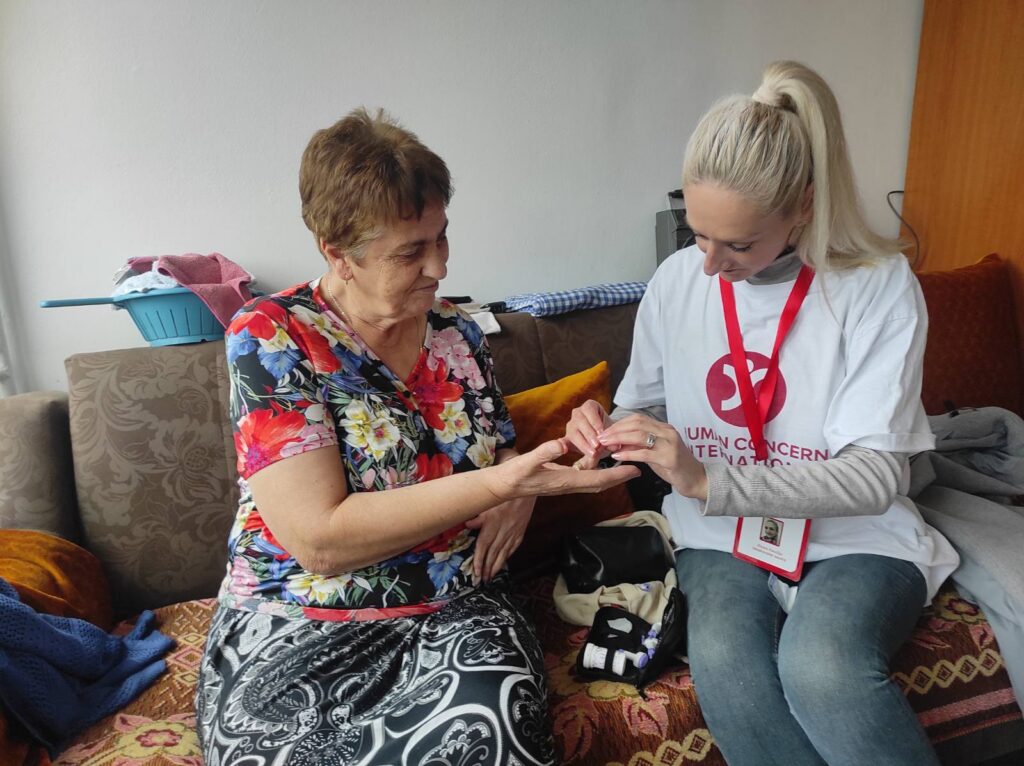
Through regular home visits, nurses and volunteers bring medical support, food and hygiene packages, as well as practical assistance directly into these homes. But just as importantly, they bring something less visible and harder to measure: presence.
Prior to the project, many beneficiaries describe a similar quiet shrinking of daily life, though each story carries its own weight.
There is Nađa, 79, living with panic disorder and agoraphobia, who for years rarely left her apartment. To her, the outside world felt unpredictable, and even a short trip to a nearby shop took immense effort.
There is Fikreta, 67, who lives with muscular dystrophy and paralysis, fully dependent on others for movement and daily care. There were long periods when basic hygiene support was not available.She would go weeks without assistance simply because no safe or consistent help could be arranged.
And Enver, 66, who lost his voice after surgery for a malignant laryngeal tumor. He communicates through writing, but before the project, his interactions were limited and often marked by misunderstanding or discomfort in public spaces.
Their lives were not defined by a single condition, but by an accumulation of barriers, isolation and tales of ordinary things gradually becoming difficult.
Now, those same homes feel a little different.
A nurse arrives. Inside, care begins in small, steady ways.
Blood pressure is measured. Medication is reviewed. Wounds are treated where needed. Sometimes groceries are unpacked onto a kitchen counter. Other times, a room is cleaned or a bath is assisted. There will also be times when nothing clinical happens at all, and the visit is simply a long-awaited conversation.
Nađa now goes on short walks with the nurse Azra- something she once believed was no longer possible. “I am not alone anymore,” she says simply.
Fikreta describes her weekly bathing support with a quiet certainty: “Now I bathe every week. We are a team.”
Enver writes on his board during visits. Communication is slow, but full of ease. He shares small jokes, everyday observations, moments that would seem ordinary elsewhere but carry real meaning in a life where speech is no longer possible. His message is always the same at the end: “I am not alone.”
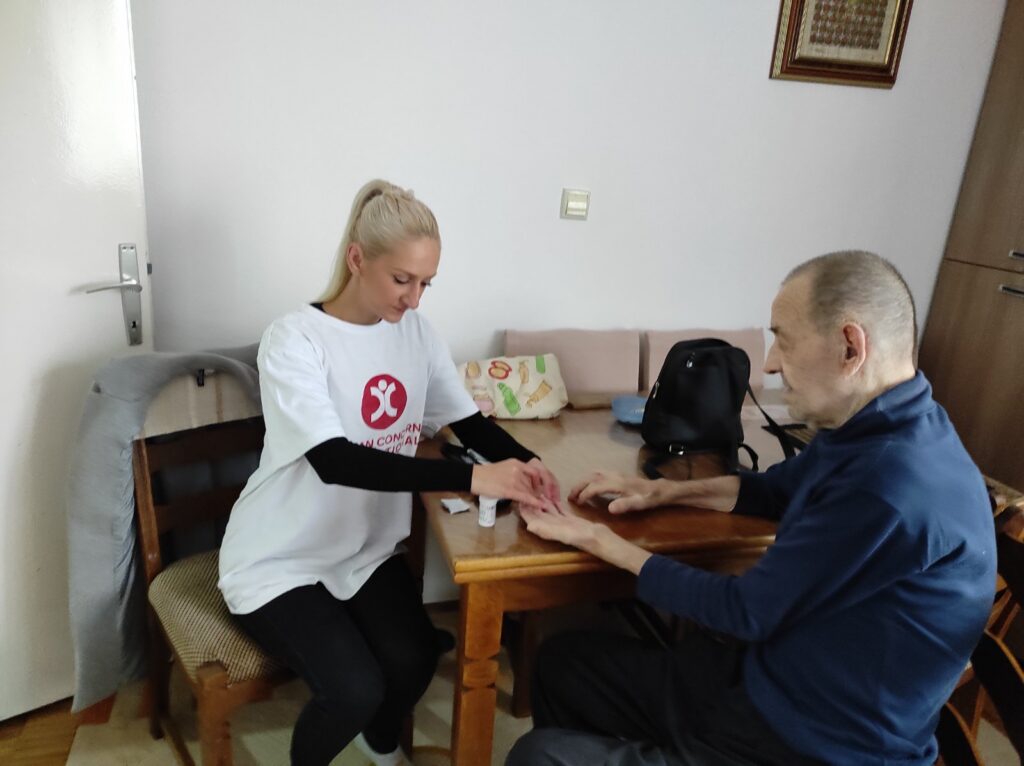
One of the quiet strengths of this home care project is its sustained support through continuity. The same homes are visited and the names of the residents are remembered. Faces become familiar across changing days, seasons and health.
Over time, this repetition has built something steady and a structured sense of trust has manifested. Some beneficiaries even begin calling staff between visits, sometimes simply because the day feels long.
It’s in these small, unplanned moments that it stops feeling like a service schedule and starts becoming part of everyday life.
What stands out across all stories is neither illness nor age. It’s how heavy ordinary tasks become when no one is there to help. This weight often reveals itself in simple errands such as unpacking medication tablets or cleaning a room.
Whilst these things seem inconsequential for many, for people navigating illness and/or limited mobility, they often determine whether they can remain independent or become entirely dependent on others. Because formal home-based medical care is not part of the legal framework in Bosnia and Herzegovina, many elderly people are left to rely on family, informal support, or simply manage alone. For those who are entirely isolated, the gap is not merely abstract and becomes evident in how each day feels and unfolds.
This project steps into the spaces where the system does not always manage to reach. Through visits, deliveries, monitoring, and assistance, it provides practical care. It ensures burdens are not shouldered alone. And as witnessed across many homes, it also transforms into an ongoing form of emotional support and quiet companionship.
By the time evening settles over Sarajevo, it doesn’t feel entirely separate from how the morning began. In some homes, the evening is just a kind of waiting. For tomorrow to come the way it always does. And often, there’s still the lingering memory of a visit earlier in the day. This memory carries a simple reassurance: someone came, and someone will come again.
Published:
June 4, 2026
Author:
By Tasfia Tasneem Rafa, Health and Livelihood Program Officer, Human Concern International
Categories:
SHARE THIS POST: