After years of conflict and displacement, returning home should mean safety, stability and the comfort of knowing that your family has a place to belong.
For thousands of families in Deir ez-Zor, however, returning home has not been that simple.
Years of conflict have left homes, infrastructure and essential services severely damaged. As families return to their communities, many are finding that the houses they once called home are no longer safe or habitable. In Deir ez-Zor City, approximately 80 per cent of buildings have been damaged or destroyed, while an estimated 50,000 houses across the governorate require rehabilitation.
For families already facing displacement, poverty and limited access to basic services, a damaged home can become another barrier to rebuilding their lives.
It was against this backdrop that Human Concern International (HCI), in partnership with The Big Heart Foundation, launched a shelter rehabilitation project in the Al-Hamidiya neighbourhood of Deir ez-Zor City, focusing on restoring safe and dignified homes for vulnerable families.
The project is targeting 150 conflict-damaged houses, supporting approximately 900 individuals, while contributing to early recovery and sustainable return.
But behind every rehabilitated house is a family with its own story.
For Najaat Al-Baker and her family, having a home to return to means having the opportunity to begin again.
Before the conflict, Najaat and her family lived a modest but stable life. Her husband relied on daily labour to provide for the family. Then war changed everything.
Forced from their home, the family experienced repeated displacement, moving between several locations in search of safety. Years of uncertainty brought physical, emotional and financial hardship. Najaat’s husband sustained a permanent leg disability after being injured in an airstrike. Najaat experienced significant health challenges. One of their sons developed a health condition following a serious childhood illness.
The family also struggled with the high cost and insecurity of rented accommodation. During displacement, they experienced repeated difficulties with landlords and short-term rental arrangements.
Yet through all of this, Najaat and her husband remained determined to keep their children in school. They held on to the hope that one day their family could return home.
Eventually, they had nowhere else to go. They returned to their severely damaged house, where safe and adequate living conditions were almost nonexistent.
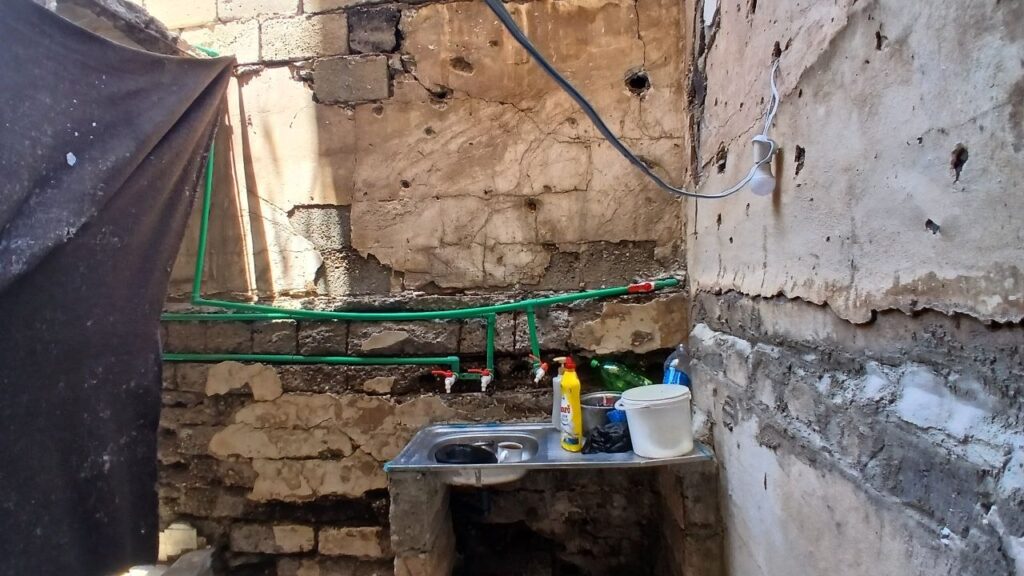
Najaat’s family was selected for assistance because of their vulnerability and the severe condition of their home. Their prolonged displacement, economic hardship, health challenges and damaged housing made them a priority for rehabilitation.
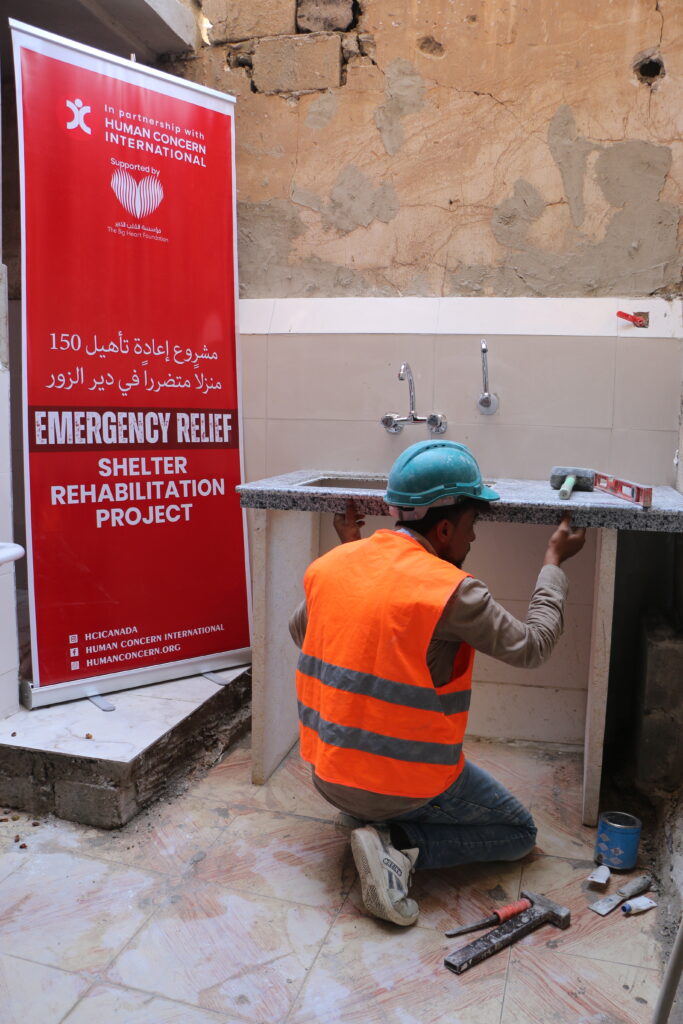
Through HCI’s home rehabilitation project, their house was transformed into a safer and more habitable living environment. The rehabilitation included structural repairs, masonry, plastering and finishing, flooring, doors and windows, plumbing and sanitary works, electrical repairs, waterproofing, and painting. These efforts transformed the damaged house into a safer, more habitable home.
The rehabilitation was about more than repairing walls and restoring basic facilities.
For Najaat, it meant the possibility of leaving behind years of uncertainty and preparing for her family’s long-awaited return.
A home became a home again.
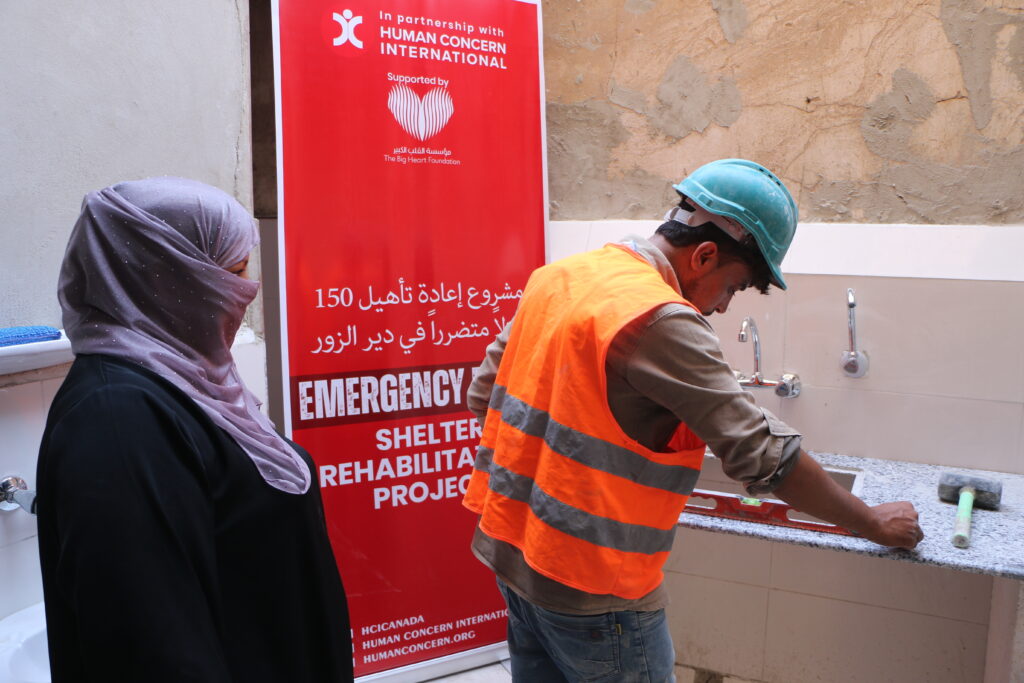
Najaat’s experience reflects the wider purpose of HCI’s shelter rehabilitation response.
The project prioritized vulnerable households, including returnees, conflict-affected families, female-headed households, households with persons with disabilities, older people and larger families. Homes were also assessed against technical criteria to ensure that rehabilitation can safely restore them to habitable conditions.
For Najaat, the impact of having a rehabilitated home extends across the entire family.
A safe home provides her children with greater stability and an opportunity to continue their education. For Najaat and her husband, it offers something they have not had for years: peace of mind.
Najaat describes the feeling simply: “Today, thanks to your support, we are finally able to return to our own home and leave those difficult experiences behind.”
Her husband hopes that continued rehabilitation of damaged homes will allow more displaced families to return safely, while also creating employment opportunities for local workers and contributing to Deir ez-Zor’s recovery.
Najaat’s story is one of many families trying to rebuild after years of conflict.
A damaged house is not simply a damaged structure. It can mean uncertainty for children, financial pressure for parents and another reason for families to remain displaced.
It can give children a safer place to grow and learn. It can give parents the dignity of providing a stable environment for their families. And it can give returning families the confidence that rebuilding their lives is possible.
The rehabilitation project in Deir ez-Zor is therefore about more than construction. It is part of a wider effort to support safe return, early recovery and community resilience.
Najaat’s journey reminds us that recovery does not happen all at once.
Sometimes, it begins with something as fundamental as a door that can close safely, a functioning home, and a family once again able to say:
“This is our home.”
And from there, hope can begin again.
Published:
September 10, 2026
Author:
By Soniya Warraich | Senior Programs Officer, Emergency Relief, Human Concern International (HCI)
Categories:
SHARE THIS POST: