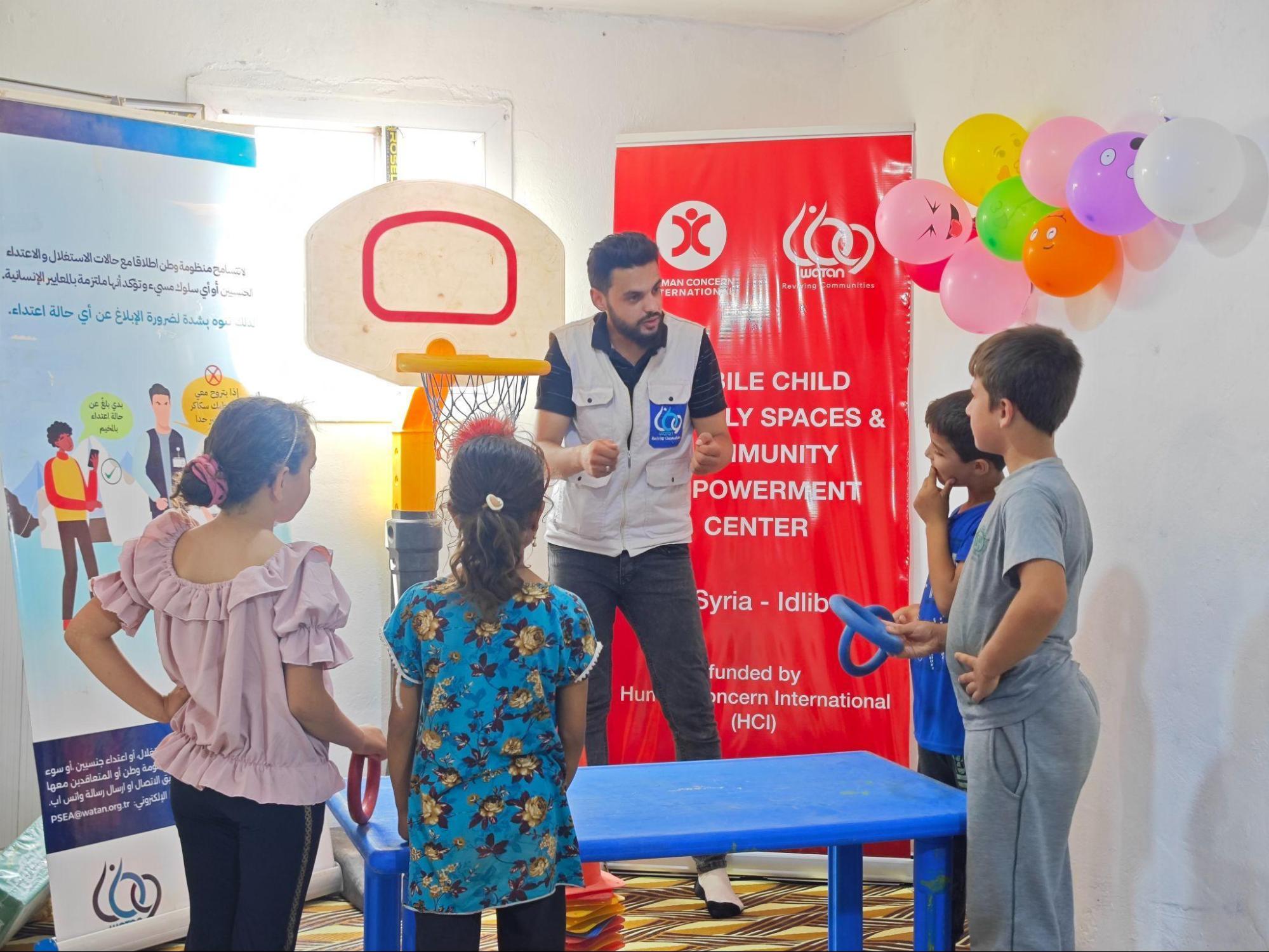
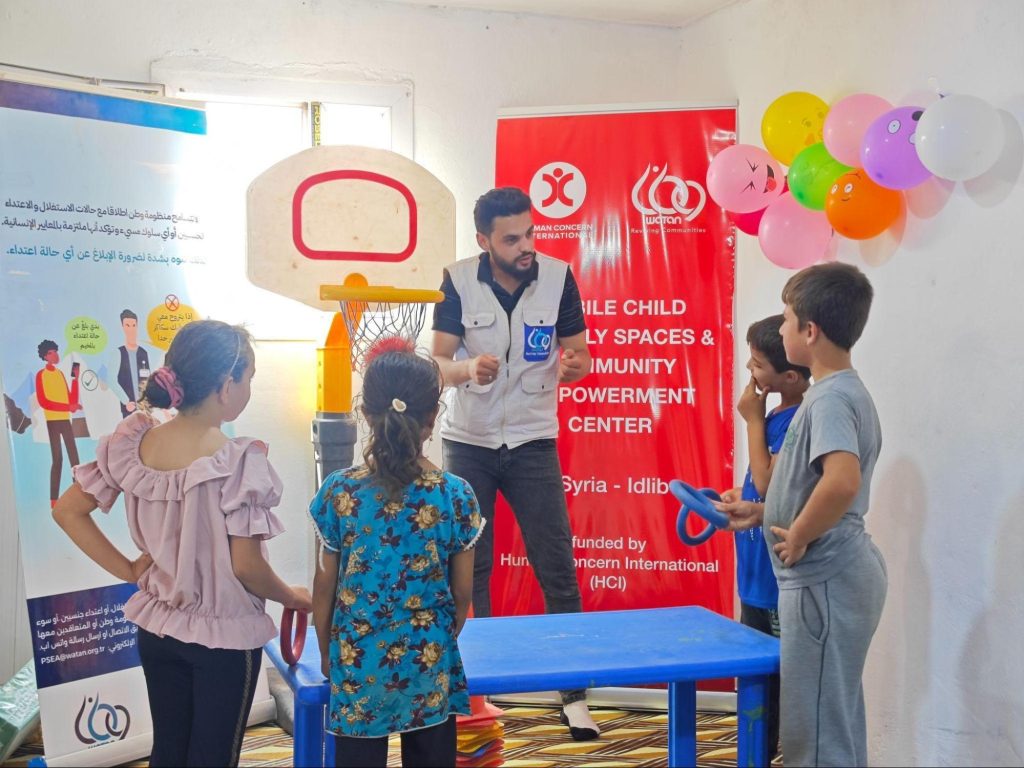
As Syria enters a new chapter following the fall of the Assad regime in late 2024, the humanitarian landscape stands at a crossroads marked by urgent needs but also opportunities for renewal.
For years, Human Concern International (HCI) has stood alongside Syrian families, responding to conflict, displacement and natural disasters with lifesaving relief and rehabilitation. These experiences have underscored that true recovery extends beyond rebuilding infrastructure. It is about restoring dignity, strengthening families and nurturing resilience in the face of unimaginable hardship.
In northwest Syria, displaced families continue to endure repeated cycles of trauma and loss. Children and caregivers face heightened psychosocial stress and protection risks, including the ever-present danger of explosive remnants of war. Youth, meanwhile, struggle with disrupted education and limited livelihood prospects.
To respond, HCI launched a rapid protection intervention, delivering psychosocial support, parenting sessions, case management and youth skills training. These efforts are helping to restore hope and lay the foundation for long-term resilience.
What was meant to be a joyful return to school turned into a nightmare that will forever haunt the dreams of Mohammad and his brother, Abdel.
On the first day back after months of displacement, they walked through their now free but recently bombarded village, carrying in their eyes hope of reclaiming their childhood. But the war was waiting for them on the road home, hidden in the deadly curse of unexploded remnants.
They did not know that the metallic object lying on the ground was a fragment of slow death. They did not realize that touching it would shatter their lives in an instant. The shell exploded in Mohammad’s hands, and in that moment, his mother’s heart burned before his body did.
At the hospital, where pain is measured in tears rather than wounds, Abdel lost part of his fingers, one eye and suffered a deep wound in his thigh. Mohammad’s condition was even more devastating: both arms amputated at the elbows, one eye destroyed, torn intestines, and massive blood loss that kept him fighting for life through ten days in intensive care and more than a month of unbearable pain.
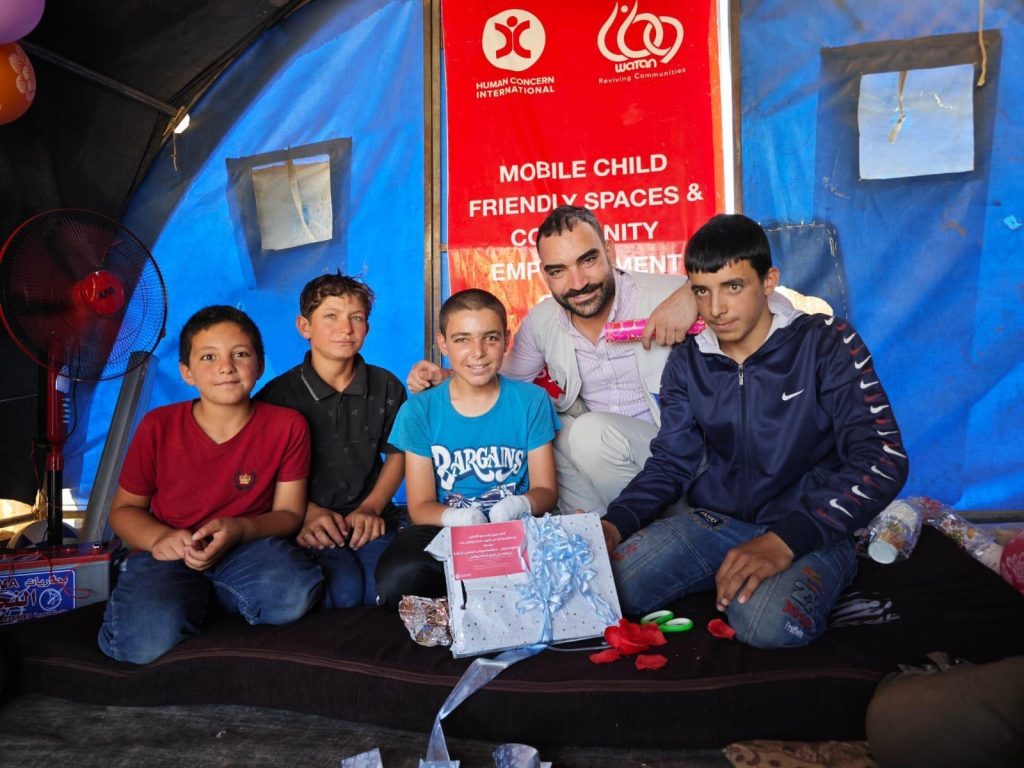
When Mohammad finally returned “home,” it was to a tattered tent with no electricity, no warmth, no school, no children playing. Even the wind seemed to sting his wounds as it passed. His mother fought back tears as she changed his bandages. While Mohammad forced a smile to keep her from breaking, in silence, he found comfort only in pigeons. The birds were his last companions after war took away his friends, games and school. His body slowly healed, but his spirit still bleeds every time he remembers that he is no longer the boy he once was.
Although Mohmmed’s needs require more support for permanent shelter, a prosthetic arm and a cosmetic lens for his eye, HCI’s psychosocial support provided him and his brother with coping skills through recreational activities. HCI also worked to enhance their resilience through the provision of a solar-powered fan and an educational tablet. These efforts led to a smile again!
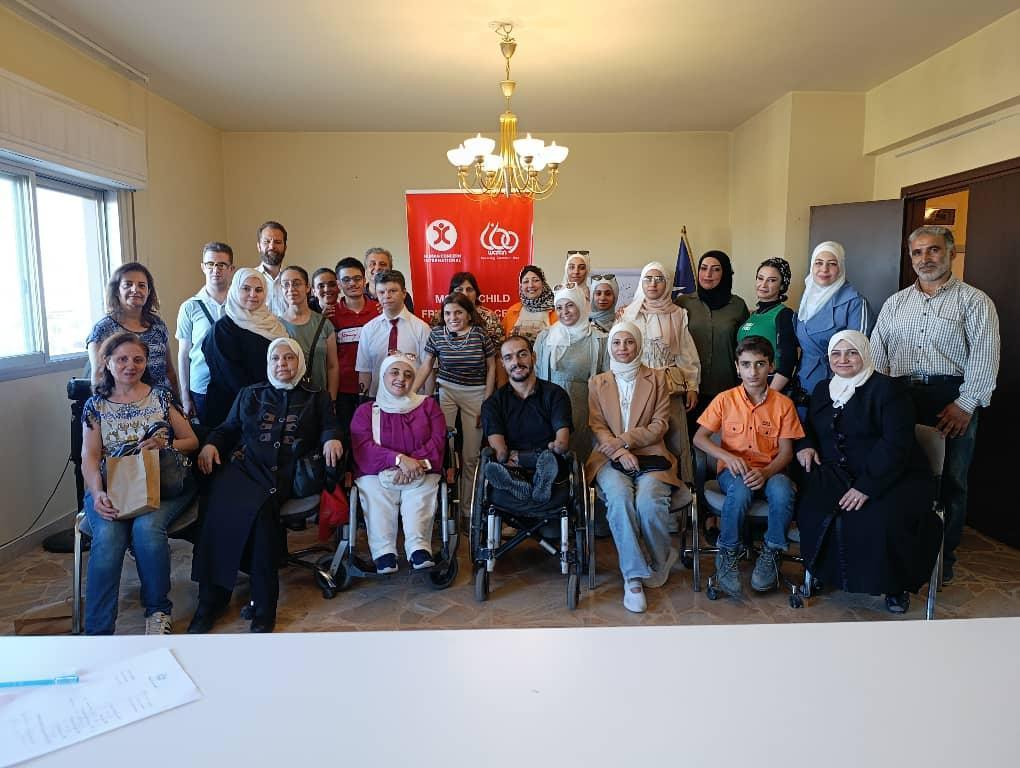
In Damascus, where persons with disabilities often face exclusion and stigma, HCI launched the Training of Trainers (TOT) program to promote inclusion and empowerment. Among the participants was Rania, a young woman determined to rise above her circumstances.
Through HCI’s support, Rania overcame both physical and psychological challenges to transform from a participant into a trainer. She began leading sessions such as “Surpassing the Self”, where persons with disabilities and their families shared stories, built resilience and found renewed confidence.
Rania’s journey reflects how such interventions create pathways for vulnerable individuals to not only rebuild their lives but also become role models who inspire entire communities.
The project has shown how integrated protection interventions can deliver transformative impact in crisis-affected communities. By expanding access to services, fostering psychosocial recovery, strengthening families, and empowering youth, it created pathways for resilience and dignity where hope had been lost. Community participation and sustained follow-up ensured that change went beyond individuals — building trust, ownership and leadership that will carry forward long after the project ends.
These stories underscore the urgent need to invest in psychosocial support, protection services and community empowerment in Syria. Children like Abdel show us that healing is possible when safe spaces and consistent care are provided. Young leaders like Rania prove that inclusive opportunities can unlock transformative potential. And Mohammed’s courage demonstrates that even in the darkest circumstances, hope can endure if we respond with compassion and sustained support.
In the face of displacement, trauma and poverty, it is not enough to simply deliver aid. We must nurture resilience, restore dignity, and walk alongside those who continue to dream of a brighter tomorrow. Their courage compels us to act because in Syria, resilience is not just survival, it is the foundation for rebuilding hope.
Published:
September 25, 2025
Author:
Soniya Warraich | Senior Programs Officer, Emergency Relief
Categories:
SHARE THIS POST: